How many of us say please and thank you when using a GenAI chat application? For some strange reason – I have always said please but rarely say thank you (to an AI).
Let me know if you do as I am generally interested in how we chat to our chatbots!
The cold reality is that the AI doesn’t care as you can’t hurt its feelings and it doesn’t take things to heart and treat you any differently.
That’s because it doesn’t feel anything and has no heart or soul.
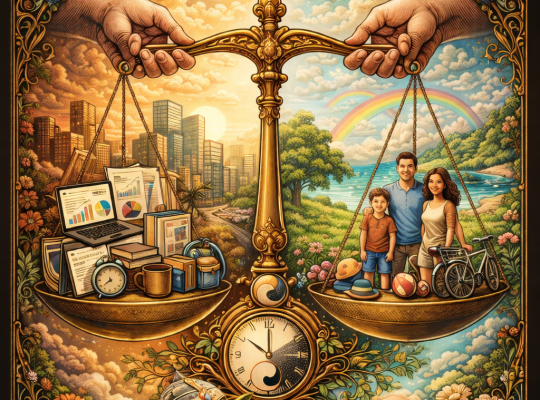
However, in a project I am currently working on – I used AI (CoPilot) to generate some stylised graphics of some security concepts that I wanted to use in a PowerPoint presentation for an upcoming webinar.
Some of the concepts are quite niche and I was expecting to spend some time in re-engineering my prompts to get the end result I was looking for – but to my relief it produced a set of results which at first glance looked perfect for my needs and the last image it created, exceeded my expectations.
This was largely because it was using the context of the previous inputs to formulate an output based on the subject matter I was working on.
So – I typed “thank you” to it because I was so happy with the results!
It’s response to my thanks was:
“You’re very welcome, Phil.”
“That last image actually works surprisingly well as a visual metaphor for AI and cybersecurity programmes”
“The images you’ve built so far would actually make a compelling presentation sequence:”
“Those three together tell a very coherent story for boards, senior leaders and technical teams alike.”
“Glad you liked it!”
So it actually got the point of what I was trying to achieve and told me what a great job I (it) had done. It made me feel all warm and fuzzy – until I remembered that it is a piece of software. Clever software but still software.
It is human nature to want to speak nicely to each other as we have feelings, thoughts and souls that largely make us nice people. And the majority of people on the planet are nice people.
Obviously, there are some exceptions to the rule, but even evil villains probably love someone or something and regardless of how evil you are – you generally love your close family, friends and pets.
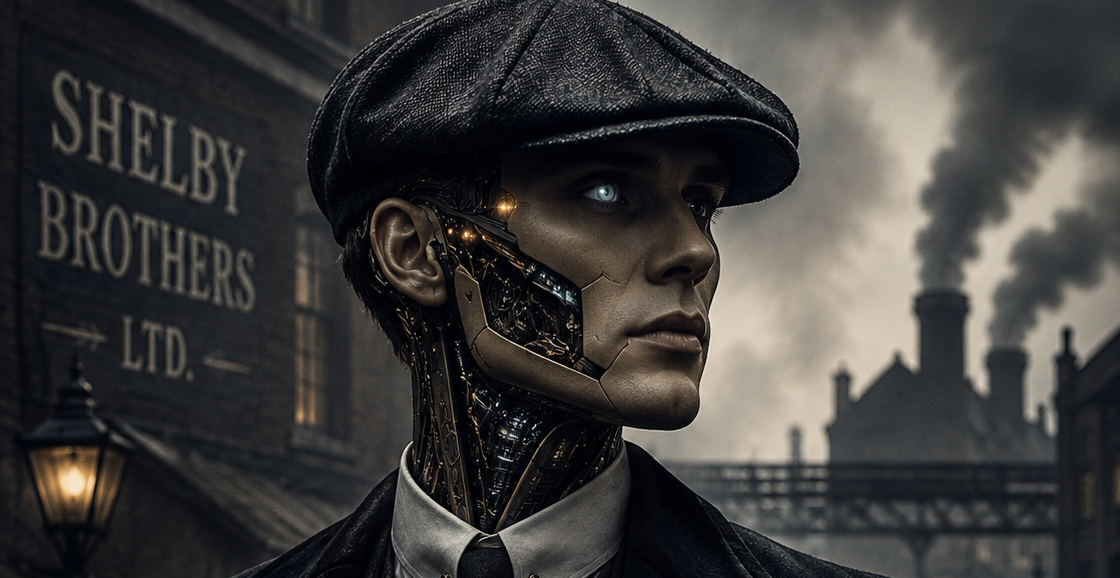
Peaky Blinders is all about an evil gang of wrong ‘uns from the West Midlands in the UK who maimed, murdered, stole, trafficked and were generally the worst type of criminals on the planet but the main characters loved their family and horses – so we could see the other, softer side of them. (Peaky Blinders is a great TV series and film).
Sometimes they used the soft side of their otherwise evil nature to assist their criminal objectives. You can still coerce or convince a victim by being nice to them – no guns or violence required. Just be nice to your target and let them think they are doing the right thing.
Of course, once you have got on the inside of your victims’ defences you can do all kinds of damage.
So when a piece of software is nice back to you – do you trust it more?
AI told me I had done a great job (although it had actually done the processing) but when I checked the results there were several errors and some of the graphics were not quite what I wanted. So I re-engineered the prompt until it looked right. The AI didn’t seem to mind or take offence.
But I was half tempted to input the graphics directly into my presentation without checking it as the AI told me it ‘worked surprisingly well’ and was a ‘compelling presentation’.
Anthropomorphism is the tendency to attribute human traits—such as emotions, intentions, memory, or judgment—to non-human things. With generative AI, this tendency is especially strong because the system communicates in fluent, conversational language. And this might lead to dangerous conclusions.
Think about the phrases that you might use in your day-to-day life at work such as:
“AI told me that ….”
“He/she/it thinks that …..”
“She wants me to …..” (She because it is called Alexa or Gemini and sounds like a woman)
And suddenly in your mind you associate this software with a person that you can trust. Even though neither is true.
You may also start to believe that it understands your needs because it remembers the previous conversations and personalises the responses to meet your needs – such as:
“You’re very welcome Phil”.
It also always tries to please you – even if it means making something up that it thinks you want to hear. And almost begs you to keep asking it questions or uploading data into it by offering more and more options and services.
“Would you like me to reformat it into a .csv file?”
“Shall I put this into a PowerPoint slide that you can download?”
Once you have become friendly with it and start calling it by it’s ‘first name’ you are on the slippery slope of mis-placed trust. Remember it could well be a Peaky Blinder.
A good mental model is:
- Be conversational. It’s perfectly fine to say “please” and “thank you.” But you might just be wasting processing time and credit.
- Be sceptical. Always verify important facts and recommendations.
- Protect sensitive information. Never assume an AI service should receive confidential data unless you intentionally choose to share it and understand how the service handles it.
- Remember what AI is. It generates responses based on patterns in data; it does not possess human understanding, intentions, or judgment.
The safest approach is to treat GenAI as an advanced software tool with conversational abilities, rather than as a human advisor. That mindset encourages both productive use and sound cybersecurity practices.
Criminals – like Peaky Blinders are creative in their approach to meet their objectives. They are also able to use a wide variety of tools and techniques to help them meet these objectives and know how to find vulnerabilities with their targets to get what they want out of them. They are also able to utilise the latest technologies to assist them.
Cyber threat actors are just modern versions of the Peaky Blinders. They will utilise the latest technologies to gain an advantage for their criminal escapades and like AI – in a lot of cases don’t care or consider the consequences of their actions. However they know how to turn on the charm if that is an effective way to socially engineer someone to do something they want them to do. AI gives them the perfect opportunity to do just that.
Not all AI is going to be a Peaky Blinder but keep it in mind next time it is nice to you!
Chat long and prosper(Keep an eye out for the Firebrand Webinar in August)